
Vietnam Motorcycle License (2026): IDP Requirements Explained
Vietnam signed the 1968 Vienna Convention on Road Traffic in 2014. That one fact decides whether your foreign licence works here, because Vietnam recognises International Driving Permits issued under that convention and nothing else. If the country that issued your IDP isn't a signatory too, the permit isn't technically recognised.
Second thing to get straight: an IDP isn't a licence. It's a translation of the licence you already hold, and it only counts when you're carrying the original alongside it. If your home licence doesn't cover motorcycles of the capacity you want to ride, no IDP will fix that. A car licence won't magically make a 150cc legal for you.
What Vietnam actually recognises
If your country signed the 1968 convention
Your IDP is officially recognised and you're riding legally, as long as the categories on your home licence cover the bike underneath you. Check your country's signatory status before you fly. It takes two minutes and it decides everything else on this page.
If your country didn't sign
You're in a grey area. Plenty of travellers rent and ride on a non-signatory licence plus an IDP and report no problems, but it isn't legal. It surfaces in two places: police checkpoints, and an insurance claim after a crash. The second one is the one that hurts.
So do you need an IDP?
| Your licence | IDP status in Vietnam | What that means for you |
|---|---|---|
| Issued by a 1968 Vienna Convention signatory | Recognised | Carry the IDP and the original licence together. Legal, provided your categories cover the engine size. |
| Issued by a non-signatory country | Not officially recognised | Often accepted in practice. Carries real risk at checkpoints and on insurance claims. |
| Any licence with no motorcycle category | Makes no difference | An IDP doesn't add categories you never earned. You aren't legal on a motorcycle. |
Getting a Vietnamese licence
For a long stay, or if you just want this settled beyond argument, convert to a Vietnamese licence. The process runs like this.
- Visa. You'll normally need a valid visa of at least three months.
- Translation. Your home licence translated into Vietnamese and notarised.
- Application. Submit it with your passport, visa, translated licence and the other required documents to the local Department of Transport.
- Theory test. On Vietnamese traffic law.
- Practical test. A riding test on the bike.
It's slow, and a bit of Vietnamese helps. My advice is to pay a local service to walk the paperwork through for you.
Insurance is where this bites
Many travel policies exclude motorcycle accidents if you were riding without a valid licence. Even with an IDP in your pocket, an insurer can argue the permit was never valid because your country isn't a 1968 signatory. Read the exclusions in your policy before you leave, not after. If the wording is vague, buy motorcycle-specific cover on top.
Riding legally, day to day
- Helmet, every time. It's the law, and it's the whole argument.
- Carry the paperwork. Licence (IDP or Vietnamese), passport and vehicle registration, on you, all the time.
- Learn the traffic rules before you're in the middle of them rather than after.
- Ride defensively. Traffic here is chaotic. Assume the bike pulling out of the side road hasn't seen you.
Renting a bike, and keeping up with the rules
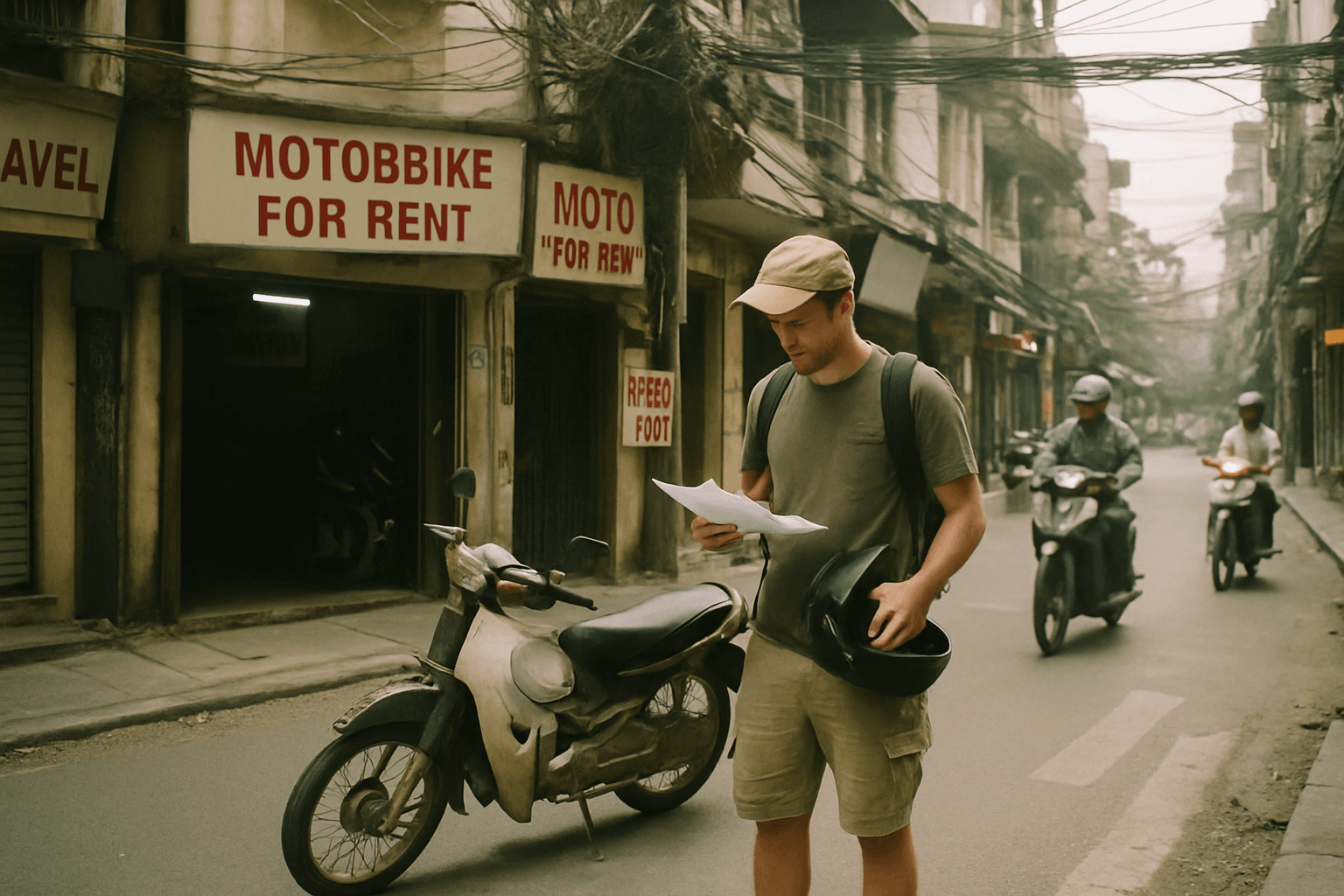
Rent from a company with a name, a shopfront and reviews. Ask exactly what their insurance covers and what happens after an accident. Go over the bike before you take it and photograph every existing scratch. Negotiate the price and pin down the terms, including what a late return costs.
Vietnam's traffic laws change. Check official government sources or ask a local operator close to your travel dates rather than trusting a forum post from three years ago. That applies to anything you read about the 2026 rules, this page included.
Once the licence question is settled, go riding. Browse our Vietnam motorcycle tours and pick a route.