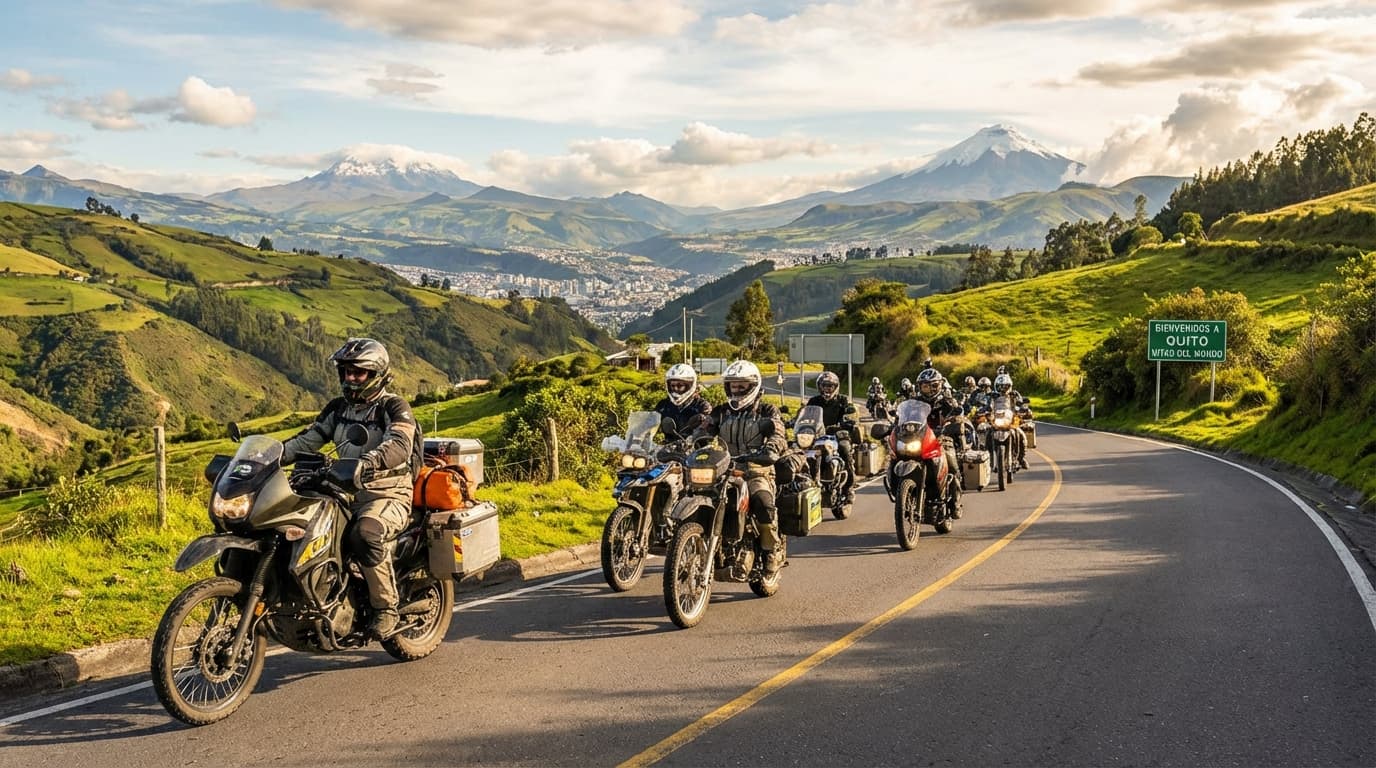
Ecuador: Journey to Middle Earth
Ecuador, Ecuador
4 days
by Ecuador Freedom Bike Rental
Contact for price
Discover motorcycle tours in Ecuador
Popular landmarks and destinations in Ecuador
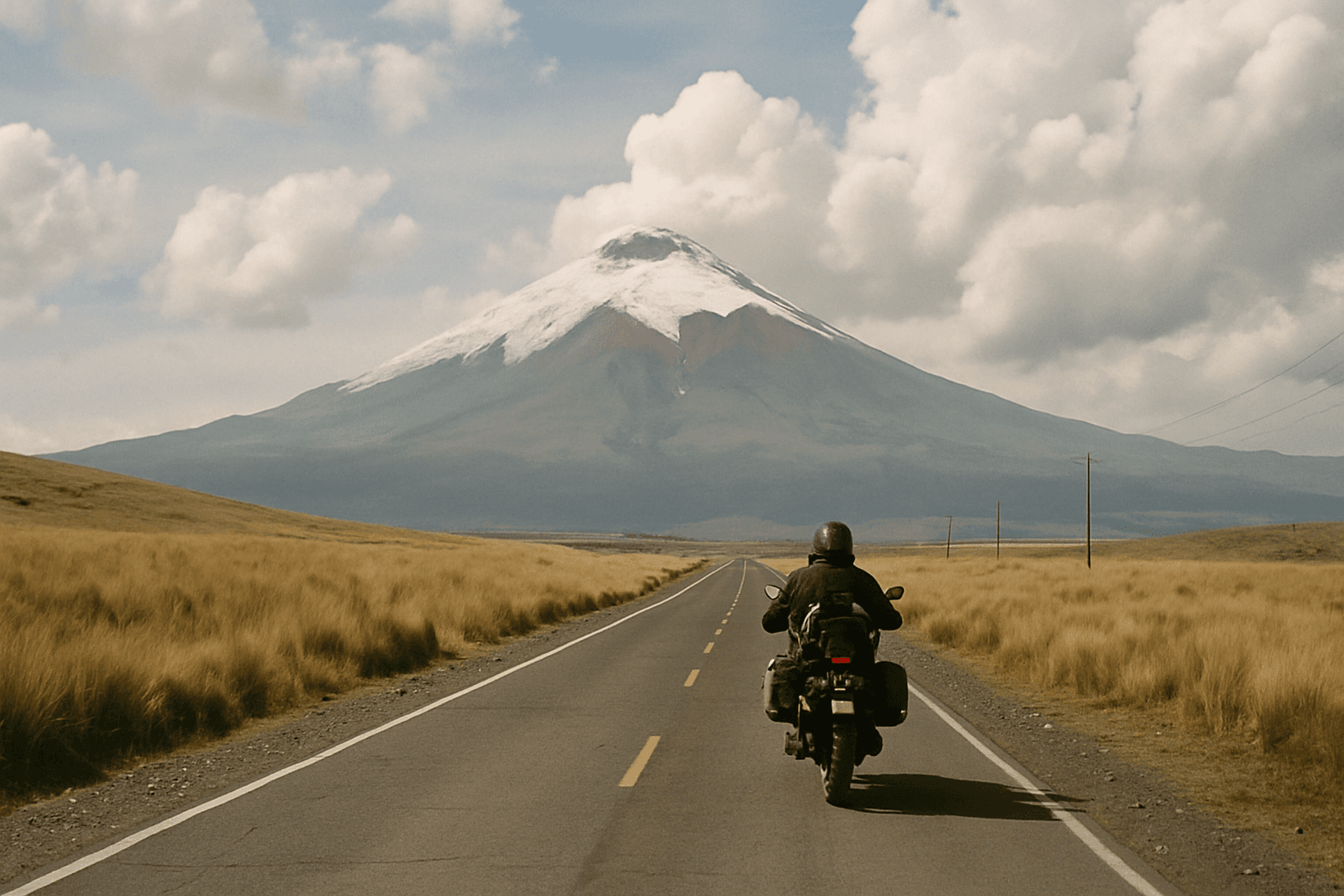
Ecuador packs an absurd amount of riding into a country you can cross in a day. The spine of it is the Andes, and the highland stretch between Quito and Riobamba is the bit riders come for: the Avenue of the Volcanoes, named by Alexander von Humboldt in the early nineteenth century for the line of snow-capped cones flanking the valley. Cotopaxi rises to 5,897 metres and is one of the most active volcanoes on the continent. Chimborazo, at over 6,200 metres, is the highest point in Ecuador and, thanks to the equatorial bulge, the point on the planet furthest from its centre. You ride between them on the Panamericana, then peel off onto secondary roads that climb into open páramo grassland where the only traffic is cattle.
The side trips turn a good week into a great one. The crater rim at Quilotoa sits at nearly 3,900 metres above an emerald lake. The Papallacta pass east of Quito tips you over the continental divide and drops thousands of metres into cloud forest and eventually Amazon lowlands, a twenty-degree temperature swing and a total change of vegetation inside two hours of riding. West of Quito the Mindo road does the same thing in reverse, falling through orchid-heavy cloud forest towards the Pacific. South and east, Baños sits at the foot of Tungurahua with waterfall roads and tunnels running down the Pastaza gorge.
Surfaces are better than most visitors expect. Ecuador has spent heavily on its main highways, and the Panamericana plus the principal access roads to Cotopaxi, Quilotoa and Chimborazo are paved and well maintained. What catches riders out is weather and altitude, not asphalt. Highland afternoons cloud over fast, fog on the páramo can cut visibility to a few metres, and heavy rain triggers mudslides that close roads without warning. Above 3,500 metres both you and a carburetted engine will feel the thin air.
Moto Mass currently lists one Ecuador trip: Ecuador Freedom Bike Rental's four-day Journey to Middle Earth, a Quito to Baños and back loop on KTM machinery. There's a 1050 Adventure if you want road comfort and a 690 Enduro R if you want to leave the pavement. It's a good introduction to how Ecuador rides: short transfers, huge altitude changes, a different climate zone at each end of the day.
Because Ecuador sits on the equator, season depends less on the month than on altitude. In the Sierra the drier, clearer window runs roughly June to September, with a second calmer spell around the turn of the year. October to May brings more frequent afternoon showers. Whatever the month, pack for cold at 4,000 metres and heat at 1,000.
1 tour found
Bring your home motorcycle licence, your passport and an International Driving Permit. The UK Foreign Office says a UK photocard licence can be used in Ecuador for the first six months after arrival, but rental companies and police routinely expect an IDP as an official translation, and most Ecuadorian rental operators list one as a requirement. Helmets are mandatory nationwide. Keep your documents on you rather than in a pannier — you are expected to be able to produce licence, passport and vehicle papers on request.
In the Andean highlands the drier, brighter season runs roughly June to September, which is when you get the best odds of actually seeing Cotopaxi and Chimborazo rather than the cloud around them. October to May is wetter, with frequent afternoon showers, though mornings are often clear. Because Ecuador sits on the equator there is very little seasonal temperature swing — altitude, not the calendar, decides how cold you will be. The coast and the Amazon side run on different patterns again.
The main highway network is genuinely good. The Panamericana and the paved access roads to the major volcanoes are well surfaced and easy riding. The hazards are other road users and weather: Ecuador has one of the higher road accident rates in Latin America, drivers change lanes without indicating, and many vehicles are uninsured. Heavy rain and mudslides close mountain roads regularly, so check locally before committing to a remote route, and treat unpaved páramo tracks as a genuine off-road proposition after rain.
Mid-size adventure and dual-sport bikes dominate, because they cope with both long paved transfers and the dirt roads that lead to the good stuff. The Ecuador tour listed on Moto Mass runs KTM 1050 Adventure and 690 Enduro R machines, which is a representative pairing: a road-biased twin for comfort at altitude, a light single for tracks. Fuel injection is a real advantage above 3,500 metres, where carburetted engines run rich and lose noticeable power.
For a first visit, guided is easier to justify than in flatter countries. A guide manages altitude sensibly — Quito already sits around 2,850 metres, and going straight over a 4,000-metre pass on day one is a common mistake — and knows which unpaved sections are rideable after rain. Self-guided rentals with GPS routes are widely available and work well for confident riders who plan short days. Either way, allow a full day in Quito before you ride anywhere high.
