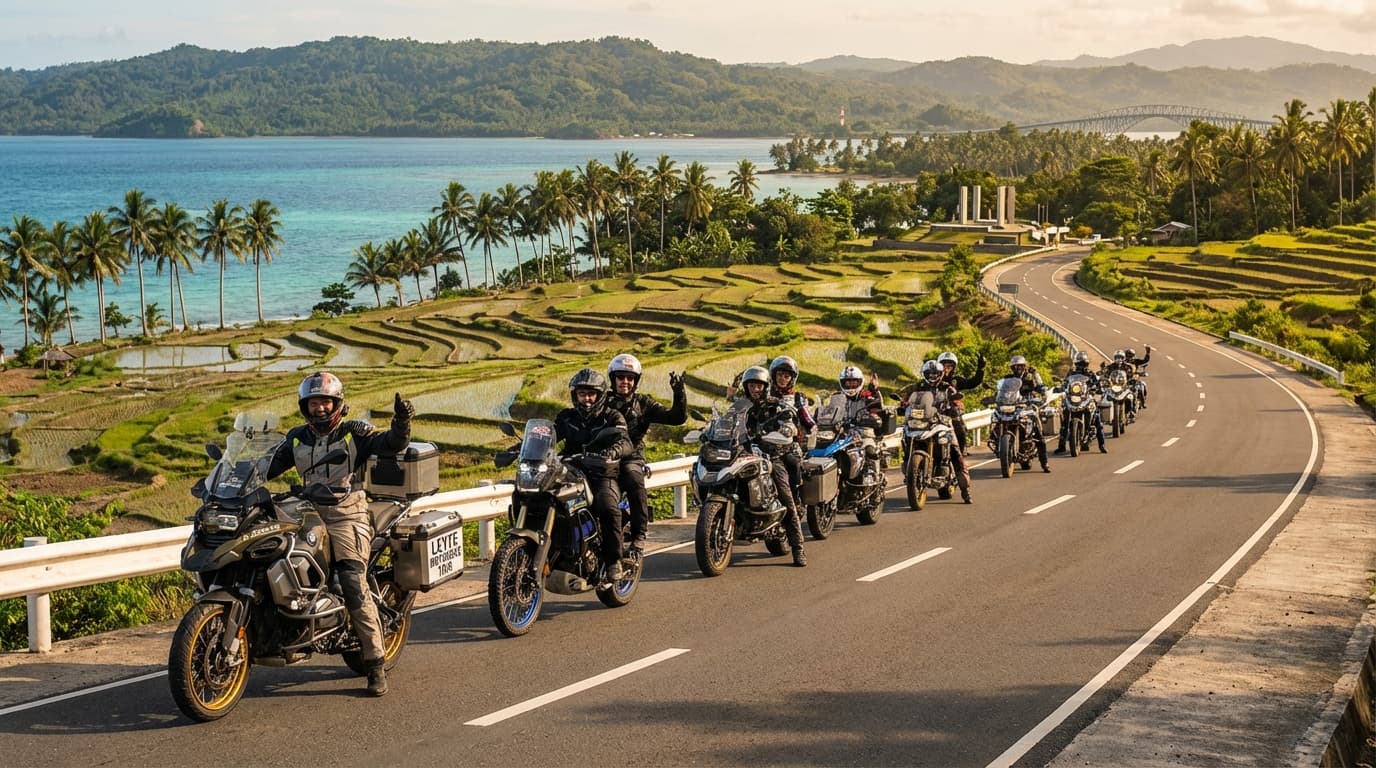
Leyte Motorbike Tour
Leyte, Philippines
4 days
by Haven’s Rentals
Contact for price
Discover motorcycle tours in Philippines
Popular landmarks and destinations in Philippines
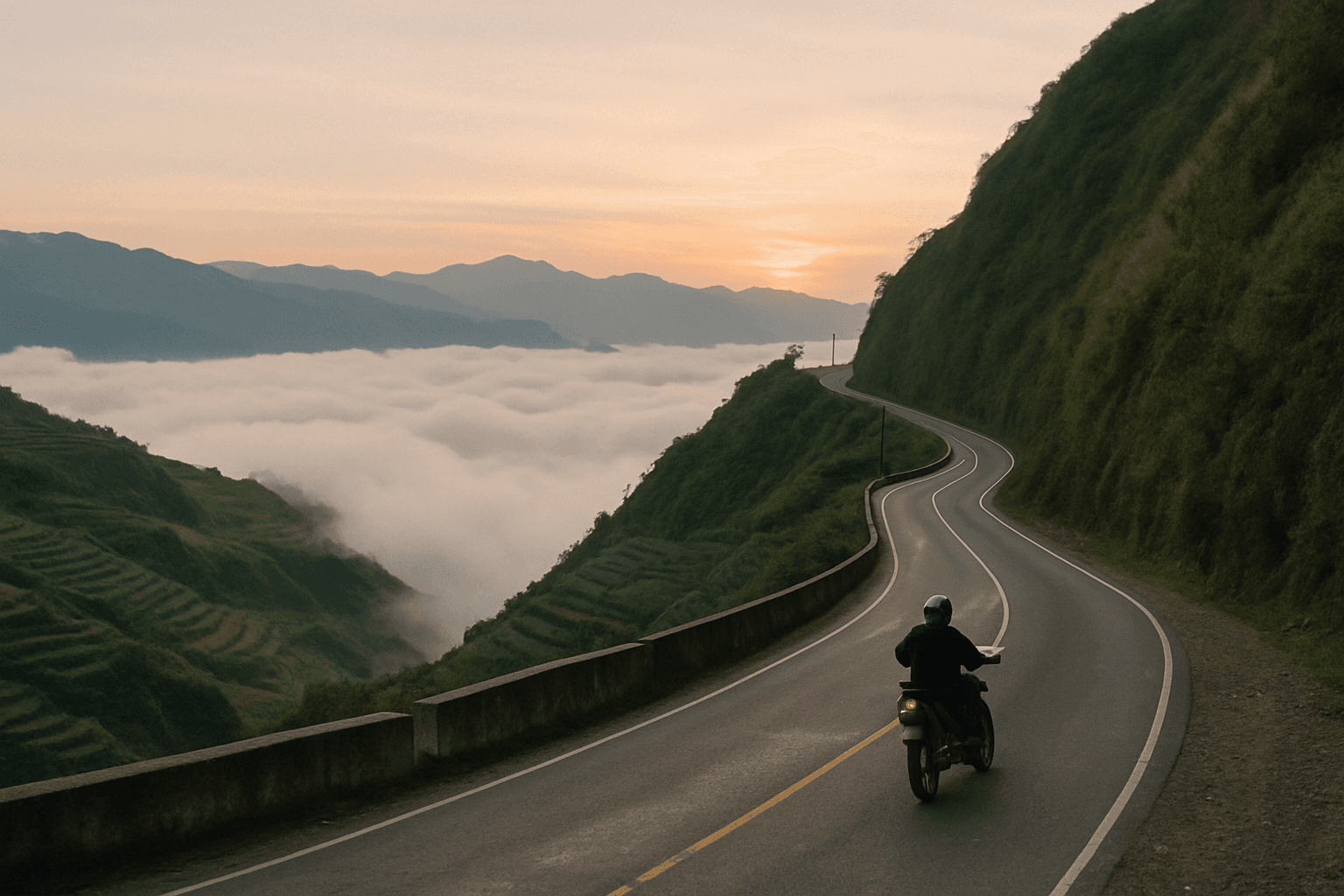
The Philippines is two riding countries stacked on top of each other, and the trip you get depends entirely on which one you pick. Inland northern Luzon is a genuine mountain destination. The Cordillera Central throws up cool, pine-covered ridgelines and switchbacks that climb for half an hour at a stretch, and the Halsema Highway runs roughly 150 kilometres from Baguio to Bontoc, cresting above 2,200 metres at Atok. Ride it and you get terraced hillsides, hanging mist, roadside vegetable markets and long sections where the drop on your right has no barrier. Keep going for the rice terraces around Banaue and Sagada, then drop west to the Spanish colonial streets of Vigan and the South China Sea coast.
The other Philippines is island riding, and it works on completely different rules. On Palawan the road out of Puerto Princesa unspools through jungle and limestone before dead-ending at beaches like Nagtabon and Kalaodiong. On Leyte you ride between rice fields, coconut plantations and fishing villages, hopping coastlines instead of crossing ranges. Distances are short, surfaces swing from fresh asphalt to broken concrete, and the navigation problem is ferry timetables rather than mountain passes.
Bikes follow that split. Small-capacity machines dominate everyday Philippine roads, and island tours run on exactly that: a Yamaha NMAX 155 or a Honda XR150-class dual sport is plenty for Palawan or Leyte. Luzon mountain tours go the other way, using full-size adventure bikes like the Africa Twin, R 1250 GS and Ténéré 700 with a support vehicle behind.
The Moto Mass listings cover both worlds. Ride 2 Discover runs a fifteen-day Northern Luzon trip out of Manila taking in Banaue, Vigan and a mix of paved and unpaved mountain roads. Haven's Rentals has two shorter island trips: a four-day Palawan run from Puerto Princesa and a four-day Leyte loop from Tacloban.
Timing matters more here than in most destinations. The northeast monsoon, amihan, brings the drier, cooler stretch from roughly November to April, and that's the window you want. The southwest monsoon, habagat, runs May to October, and tropical cyclones are most likely to hit Luzon between June and September. Palawan generally stays drier than Manila.
Two realities shape every Philippine ride. Traffic is dense and unpredictable, full of tricycles, jeepneys and buses overtaking blind, so speeds stay low and concentration stays high. And mountain roads slide. Heavy rain in the Cordillera routinely triggers landslides that shut a pass for hours or days. Ride early, finish before dark, build slack into the plan.
Carry your home motorcycle licence, your passport and an International Driving Permit. The UK Foreign Office states that visitors can drive on a UK licence for up to 90 days from arrival and must apply for a Philippine licence beyond that; most nationalities are treated similarly. The IDP itself grants no extra rights — it is a recognised translation and is only valid when presented alongside the original licence. Make sure your licence actually covers motorcycles of the size you intend to ride, because a car-only entitlement will not help you at a checkpoint or with an insurer.
Aim for the dry northeast monsoon season, roughly November through April, with December to February usually the most comfortable. The southwest monsoon runs May to October and brings sustained rain, and tropical cyclones are most likely to hit Luzon between June and September. Palawan and the southern islands tend to stay drier and see fewer typhoons than Luzon, so an island trip has a slightly wider workable window than a Cordillera mountain tour.
Mixed, and the variation is the point. Main national roads are usually paved and in reasonable shape, but mountain routes in the Cordillera are narrow, edged by unprotected drops, and prone to landslides and washouts after heavy rain. Provincial and island roads swing between smooth asphalt, rough concrete and gravel, sometimes within a kilometre. Traffic is the bigger hazard: tricycles, jeepneys, buses and livestock all share the lane. Avoid riding after dark, when unlit vehicles and potholes become very hard to read.
Small-capacity bikes rule the roads — underbones, scooters and 150cc-class dual sports. Island tours are typically run on machines like the Yamaha NMAX 155, Honda XR150 or Kawasaki Rouser, which suit the short distances and tight village roads. Organised mountain tours in northern Luzon use full-size adventure bikes instead, with Honda Africa Twin, BMW R 1250 GS and Yamaha Ténéré 700 all in circulation. If you want a big bike, book a tour that supplies one; long-term rental of large-capacity machines is not widely available.
Guided makes more sense in the Philippines than in many destinations. Multi-island itineraries depend on RoRo ferry schedules that change without notice, mountain roads close after landslides, and a support vehicle solves both luggage and breakdowns. A guide also smooths the checkpoint conversations and finds accommodation in towns with almost no online presence. Self-guided riding works well if you stay on one island, keep daily distances modest, and are comfortable improvising when a road turns out to be shut.

Free ride routes
From Tacloban · Philippines
121 km↑ 310 mEasy