
The Best Time for a Motorcycle Tour in Thailand
Thailand has three seasons, not two, and the third one is why so many riders come home disappointed. Cool and dry. Hot and smoky. Wet and green. The middle one, burning season, barely appears in travel guides, and it's the single biggest factor in whether you actually see the mountains you came to ride through.
Here's the northern calendar month by month, how the south differs, and which tours realistically run when. For the destination overview, see our Thailand motorcycle tours hub.
The three seasons of northern Thailand
Cool and dry: November to February
The peak window, and the reason most tour calendars cluster here. Rainfall in Chiang Mai drops to almost nothing, under 15 mm a month in December and January, and daily maximums sit around 29 to 30°C. Warm rather than punishing. Mountain mornings are genuinely cold: a 1,500-metre pass at 7am in January has you reaching for a liner, and the summit of Doi Inthanon at 2,565 metres is a different climate altogether.
Hot and smoky: late February to April
Temperatures climb hard, peaking around 36 to 37°C in April. Heat isn't the problem. Agricultural and forest burning fills the northern valleys with smoke from roughly February onwards, fire activity usually peaks in March, and things ease in May when the rains return. Chiang Mai sits in a bowl of narrow valleys where the haze settles, and the city regularly records unhealthy air quality through this period. NASA's Earth Observatory has tracked the pattern from orbit. For a rider it means hazy or invisible views on roads whose whole appeal is the view.
Wet and green: May to October
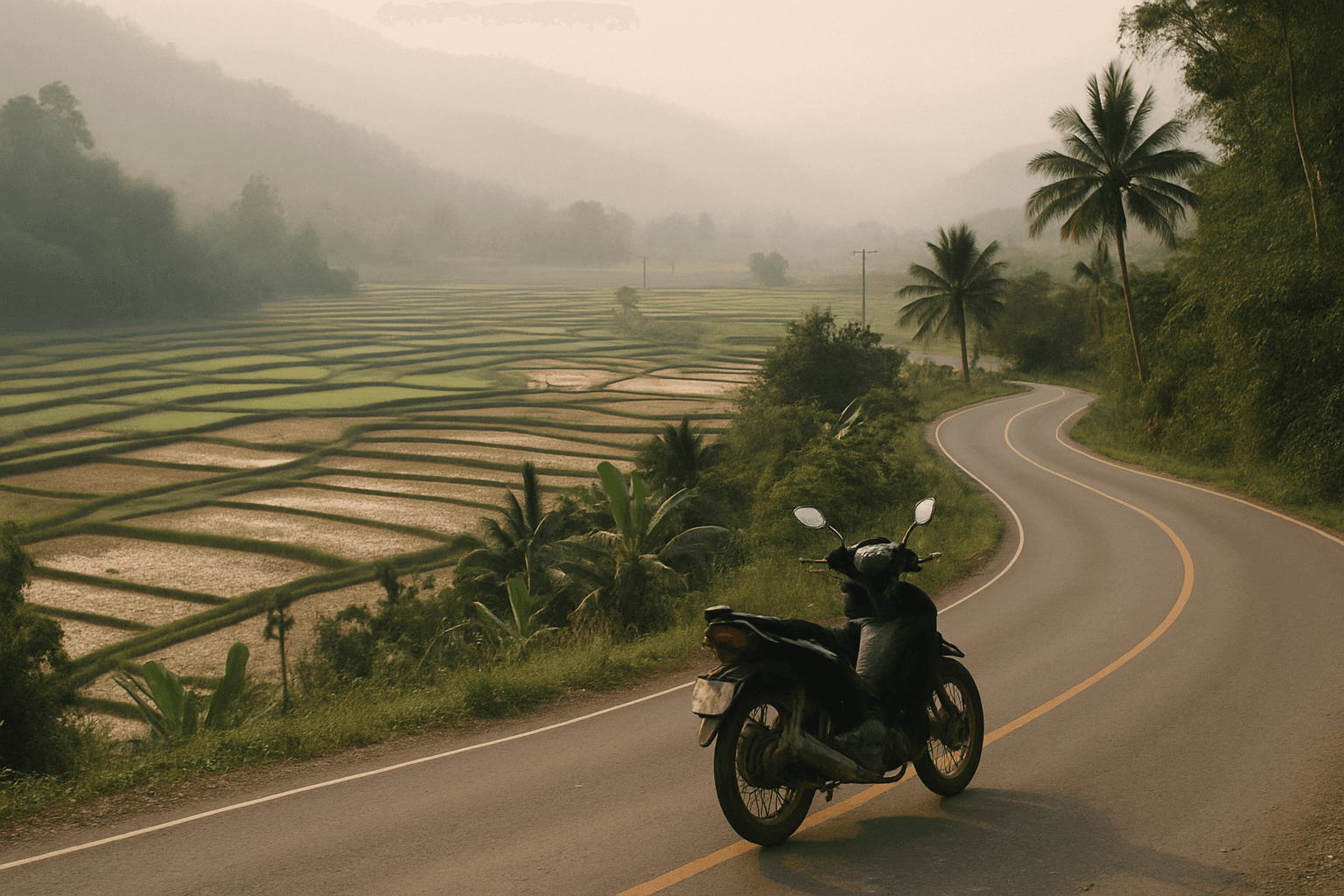
The southwest monsoon. Rain in Chiang Mai peaks in August at over 220 mm for the month, but it arrives as heavy afternoon downpours rather than all-day drizzle, and mornings are often clear. The hills turn a green they simply aren't in February, waterfalls run properly, traffic thins and prices soften. Plenty of experienced riders pick late September and October on purpose: rain easing, landscape at its best, smoke months away.
Month by month
| Month | Chiang Mai avg high | Rain | Air quality | Verdict |
|---|---|---|---|---|
| January | 30°C | Very low | Good | Excellent, peak season |
| February | 33°C | Very low | Deteriorating late | Good early, uncertain late |
| March | 35°C | Low | Usually poor | Avoid the north |
| April | 37°C | Rising | Often poor | Hot and hazy, avoid |
| May | 35°C | Monsoon begins | Clearing | Improving, showers |
| June | 33°C | Wet | Good | Workable, green |
| July | 32°C | Wet | Good | Workable, green |
| August | 32°C | Wettest month | Good | For the committed |
| September | 32°C | Wet | Good | Good late in month |
| October | 32°C | Easing | Good | Very good, quiet and green |
| November | 31°C | Low | Good | Excellent |
| December | 29°C | Very low | Good | Excellent, coolest riding |
Temperature and rainfall figures come from the long-run climate record summarised on the Chiang Mai climate table.
The south runs on a different calendar
Southern Thailand ignores the northern pattern, which helps when your dates are fixed. The Andaman side (Phuket, Krabi, the west coast) takes the brunt of the southwest monsoon from roughly May to October. The Gulf side is offset: drier through those months, heaviest rain around October to December.
There's no burning season in the south, and temperatures are more even year-round but consistently humid. So if you have to ride in March or April, go south. Coastal and island itineraries like the Southern Thailand tour and the Paradise Island tour exist for exactly that reason, as do point-to-point runs like Chiang Mai to Phuket.
Which tours run when
- Northern mountain tours concentrate in November to February. The OnRoad Mae Hong Son Loop tour and its off-road counterpart are cool-season trips by nature.
- Long premium itineraries like the 13-day Northern Thailand Experience publish departures across spring and autumn, because a support truck and fixed dates need a wider window.
- Eastern and central routes from Pattaya, including the Kanchanaburi tour and the Isan adventure, get less smoke than the far north and stretch the usable season.
Operator detail is in the Thailand motorcycle tour companies guide. If the Mae Hong Son Loop is your target, the loop route guide covers the seasonal implications section by section.
Riding in the wet season
More viable than most people assume, and a good trade if you're flexible.
- Start early. Rain is overwhelmingly an afternoon and evening event, so a 7am departure often buys you a dry morning.
- Tyres matter more than waterproofs. Thai roads develop a slick film in the first ten minutes of rain, and painted lines and manhole covers turn treacherous.
- Landslides and rockfall close northern mountain roads occasionally. Build slack into the plan.
- The mountains vanish into cloud for hours. Atmospheric on the Mae Hong Son ridges, frustrating on Doi Inthanon.
- Book late. Availability is good and rates are softer than in peak season.
Dates that affect a riding trip
Two national events land squarely in the riding calendar. Plan around them rather than into them.
- Songkran, Thai new year, mid-April. A joyful festival and a terrible week to be on a motorcycle. Water gets thrown at everything that moves, riders included, and road accident rates rise sharply over the holiday. Enjoy it on foot.
- Loy Krathong, November. The opposite problem: route yourself somewhere good for it. Chiang Mai during the lantern festival is something else, and accommodation across the north books out well in advance.
Packing changes with the season, and the list is short. November to February, a jacket liner or fleece for mountain mornings plus something for your neck. March and April, a lightweight mesh jacket and a properly ventilated helmet. May to October, real waterproofs rather than a poncho, spare gloves, and dry bags for anything electronic. Thai rain finds every gap in a tank bag.
Frequently asked questions
What's the best month to ride in Thailand?
December and January in the north. Dry, clear, and cool enough that a full day in gear is comfortable. November and late October are close behind and quieter. If you'd take green landscapes and empty roads over guaranteed sunshine, I'd pick October.
How bad is the burning season really?
Bad enough to change your plans over. Between roughly February and April the northern valleys fill with smoke from agricultural and forest fires, air quality in Chiang Mai regularly reaches unhealthy levels, and the long mountain views that define the region aren't there. You can still ride. You're just riding a diminished version of the trip.
Can I ride during the monsoon?
Yes, and plenty do. Rain is heavy but short and concentrated in the afternoon, so early starts work. Expect wet roads, the odd landslide on mountain routes, and the best scenery of the year. Bring proper waterproofs instead of relying on rental gear.
Is northern or southern Thailand better in April?
Southern, without much argument. April is the hottest month nationally, the north is usually still smoke-affected, and the south has no burning season and hasn't started its heaviest Andaman rain. Humid, yes. But you'll see where you're riding.
How cold does it get in the northern mountains?
Cold enough to matter. Winter mornings on the passes and on Doi Inthanon, Thailand's highest point at 2,565 metres, can be close to single figures while the valley below is in the twenties. A liner or a fleece takes almost no space and changes the first two hours of every winter riding day.
Should I book ahead for the cool season?
Yes. Large-capacity fleets in Thailand are small relative to demand, and the best bikes on November to February dates go three to six months out. Wet-season and shoulder departures are usually available at much shorter notice.
How does Thailand compare with Vietnam for timing?
They peak at slightly different times, which is handy if you're choosing between them or combining them. We compare the two calendars directly in Thailand vs Vietnam: best time to ride, and the northern Vietnamese picture is in the Ha Giang Loop guide.