SEBA: Serbia and Bulgaria, 15 Days
Krk, Croatia
15 days
by Moto Adventures Krk
€3,300 / person
Discover motorcycle tours in Croatia
Popular landmarks and destinations in Croatia
The northern Adriatic makes a handy base for a motorcycle trip because so much is within a day's ride. From the island of Krk in the Kvarner Gulf, the Velebit range rises straight behind the coast, the Alps are a long day to the north-west, and the border with Bosnia and Herzegovina is a few hours inland. Rijeka airport sits on the island itself. That geography is why tours from here tend to be loops that leave the sea on the first morning and come back to it at the end.
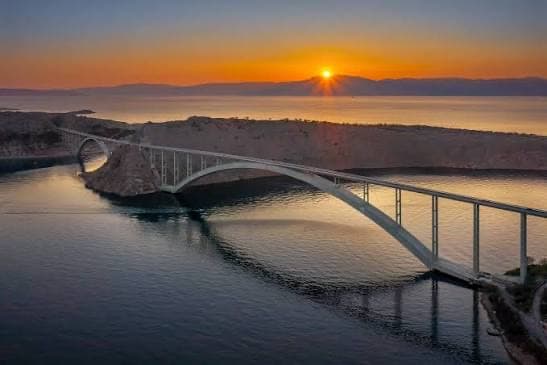
Krk is joined to the mainland by the Krk Bridge, a concrete arch opened in 1980 and toll-free since June 2020. It is also exposed. When the bura blows down off the mountains, the bridge is closed to motorcycles, sometimes for hours, so a coastal plan needs some slack. From Valbiska on the west side of the island, car ferries cross to Cres and to Rab, which opens up island routes further south through Kvarner.
The coast road is the reason many riders come. South of Rijeka the D8, the old Adriatic Highway, follows the shore past Crikvenica and Senj, with bare Velebit limestone on one side and the islands on the other. It is narrow in places, busy in July and August and slow behind campervans, but the views rarely let up. Roads climb inland from it over the Vratnik pass above Senj, and from Karlobag up over the Velebit to Gospić and the Lika plateau, with the Plitvice lakes beyond. Behind Rijeka, the forests of Gorski kotar are cooler and quieter, a useful change on a hot day.
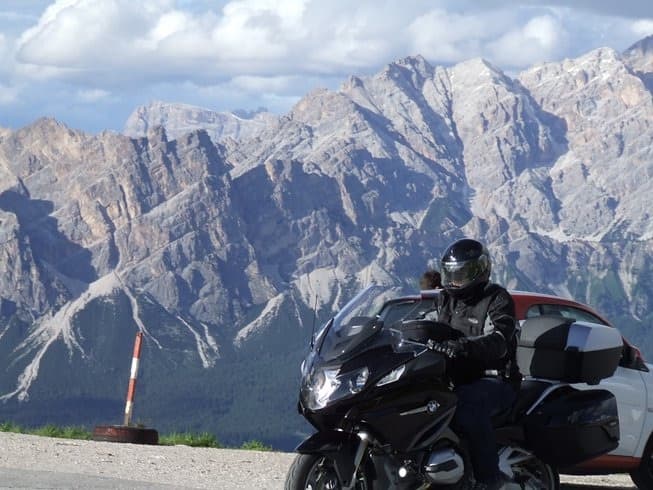
North-west, the Alps are closer than most people expect. A ride through Slovenia into north-east Italy puts you in the Dolomites in a single long day, among passes such as Giau, Pordoi, Sella, Gardena and Fedaia. Early in the season snow can keep the high passes shut, so routes there are often adjusted around openings.
East and south-east lie the Balkans proper. In Bosnia and Herzegovina the roads follow the Una, Neretva and Drina through river canyons and over mountain passes, by way of Sarajevo, Jajce, Mostar and the Sutjeska valley. Serbia adds Mokra Gora, the Drina towards Višegrad and the mountain roads of Kopaonik, and longer trips carry on into Bulgaria. Most main roads are paved, though rural road quality in Serbia varies and gets worse after bad weather. Bosnia and Herzegovina and Serbia are outside the Schengen area, so expect proper border checks and queues each way.
The tours listed for Croatia at the moment are guided loops that start and finish in the town of Krk, from eight to fifteen days, all on paved roads: one to the Dolomites, one through Bosnia and Herzegovina and Serbia, and a longer one that continues to Bulgaria. Bikes are not included. Riders bring their own or arrange rental separately, which matters for licence and insurance paperwork when you cross into non-EU countries, so read the questions below before you book.
3 tours found
Late spring to early autumn. The tours listed here run from May, but early in the season snow can keep the high passes in the Dolomites closed, so routes there may change. July and August are hot on the coast and the roads are at their busiest with holiday traffic, and the UK Foreign Office warns that wildfires are common in Croatia's hot, dry summers. The other thing to plan around is the bura, a strong north-easterly wind on the Kvarner coast. When it blows hard, the Krk Bridge is closed to motorcycles, sometimes for hours. Many riders aim for late May, June or September to avoid the worst of the heat and the crowds.
Carry your full home licence with the motorcycle category on it. EU licences are valid across the EU, which covers Croatia, Slovenia, Italy and Bulgaria. The UK Foreign Office says a UK photocard licence can be used in Croatia for up to a year and is accepted in Slovenia and Italy, while an old paper licence may also need an International Driving Permit. Outside the EU the rules differ. In Bosnia and Herzegovina a UK licence is enough on your own bike or one hired outside the country, but you need the 1968 IDP if you hire a bike there. In Serbia a UK photocard licence is valid, and the Foreign Office suggests carrying the 1968 IDP because Serbian police recognise it. Riders from the US and other countries outside Europe should get an IDP at home before they travel, since it can't be issued abroad.
Croatia joined the Schengen area in 2023, so visitors from visa-free countries such as the UK and US can stay up to 90 days in any 180 days across the whole area. The EU's Entry/Exit System has been running since October 2025. On your first entry you may be asked for fingerprints and a photo at the border. It is free but can add time. ETIAS, the online travel authorisation, had not started at the time of writing. The UK government says it will cost 20 euros, the EU will announce the start date in advance, and you should only apply on the official EU website. Bosnia and Herzegovina and Serbia are not in Schengen and each let UK visitors stay 90 days in six months without a visa, so on a Balkan loop you leave and re-enter the Schengen area and should expect checks both ways. The UK Foreign Office also notes checks at Slovenia's border with Croatia.
Croatia charges motorway tolls by distance. The government has legislated a barrier-free electronic system from 1 March 2027, with tolls paid through an on-board ENC device or number-plate cameras instead of at booths, so check the current rules with Hrvatske autoceste before you ride. The Krk Bridge has been free since June 2020. Slovenia uses an e-vignette for its motorways and expressways, sold in weekly, half-yearly and yearly versions for motorcycles, and the UK Foreign Office advises buying it only from the official DARS website or outlets. Italian motorways charge by distance at toll booths, and Bulgaria requires a digital vignette for motorways and main roads outside towns. On a guided tour, ask which sections use motorways.
The UK government says all UK vehicle insurance gives the minimum third-party cover in the EU, Bosnia and Herzegovina and Serbia, and that you don't need to carry a Green Card in any of them, though you still need valid insurance. Vehicles insured in the EU are covered by the same Green Card agreement. The UK Foreign Office notes that Bosnia and Herzegovina border police can ask for printed proof of insurance, and if your policy isn't valid there you can buy border insurance at the crossing. For Serbia, carry the bike's registration and ownership documents. Ask your insurer whether theft and damage cover extends outside the EU, and remember that the EHIC and GHIC health cards don't cover Bosnia and Herzegovina, so your travel insurance needs to cover motorcycling there.
Ride with dipped headlights on at all times, all year. The UK Foreign Office notes that this applies to motorcycles and scooters, while cars only need lights on during the day from November to March. Helmets are compulsory for rider and passenger, and Croatian police check that they are an approved type and properly fastened. The drink-drive limit is 0.05 per cent, and zero for riders under 24. Traffic drives on the right. If the route continues to Bulgaria, dipped headlights are required in the daytime there too.
The tours currently listed on Moto Mass for Croatia start and finish on Krk and run 8 to 15 days, covering roughly 1,300 to 3,700 km. At the time of writing, listed prices start at about 1,500 euros per rider for eight days and about 3,300 euros for 15 days, based on a group of ten sharing rooms, and smaller groups pay more per person. Bike rental and fuel are not included. Croatia has used the euro since January 2023 and Bulgaria since January 2026, but Bosnia and Herzegovina uses the convertible mark and Serbia the dinar, so carry a card that works abroad and some local cash. Confirm the current price and what is included with the operator before you book.